
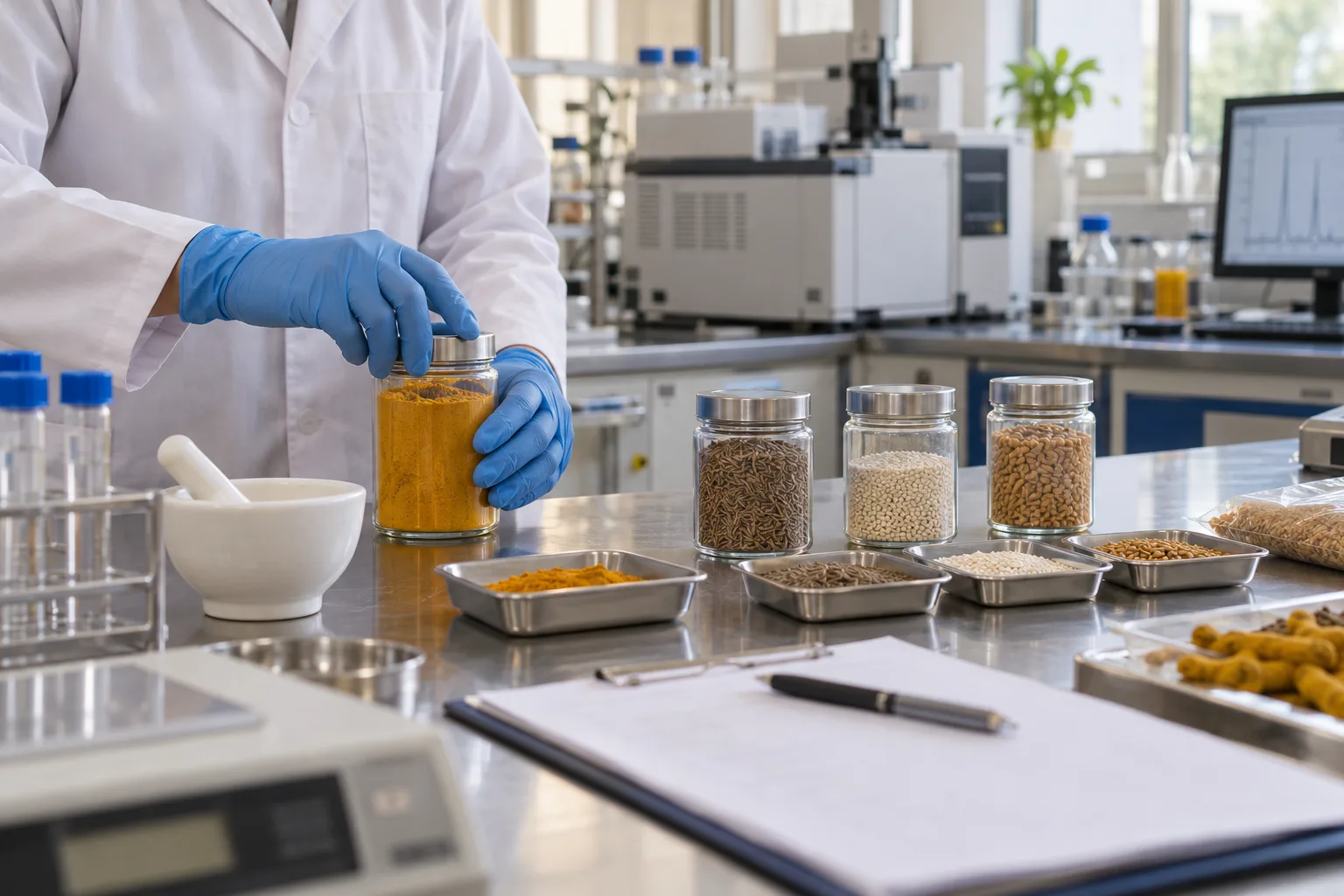
Growsian Agro coordinates mycotoxin and aflatoxin testing within a documented export supply programme. For each order, the relevant product, operator, lot, evidence and destination requirements are aligned before dispatch.
Certification and quality evidence must match the exact product, operator, activity, lot, shipment and destination. A logo or certificate shown out of context is not enough to prove eligibility for every order.
Send an enquiry | Submit a Product Requirement
Why mycotoxin and aflatoxin testing matters
Mycotoxins are toxins produced by moulds that can grow on crops in the field or during drying and storage. They are a food-safety hazard independent of organic status, and some are tightly regulated. Testing is concentrated on the commodities and conditions where mould growth is most likely.
Aflatoxins and ochratoxin A
The mycotoxins most often tested are the aflatoxins — usually reported as aflatoxin B1 and total aflatoxins — and ochratoxin A (OTA). Aflatoxins are associated with warm, humid growing and storage conditions, while OTA is associated with certain spices, dried products and storage.
High-risk commodities
Groundnuts (peanuts), chilli and other spices, tree nuts, and some dried and stored products are recognised higher-risk commodities for aflatoxins. For example, organic groundnuts are typically supplied with aflatoxin control and testing because of this risk. Match the test to the commodity.
Methods and market-specific limits
Mycotoxins are measured by methods such as HPLC or validated immunoassays on a defined sample. Limits, including those for aflatoxin B1, total aflatoxins and OTA, differ by market and commodity and change over time. We do not publish fixed numeric limits because the buyer and destination market define the applicable limits and methods. Confirm current limits with the destination authority or the buyer’s specification. See the testing overview.