
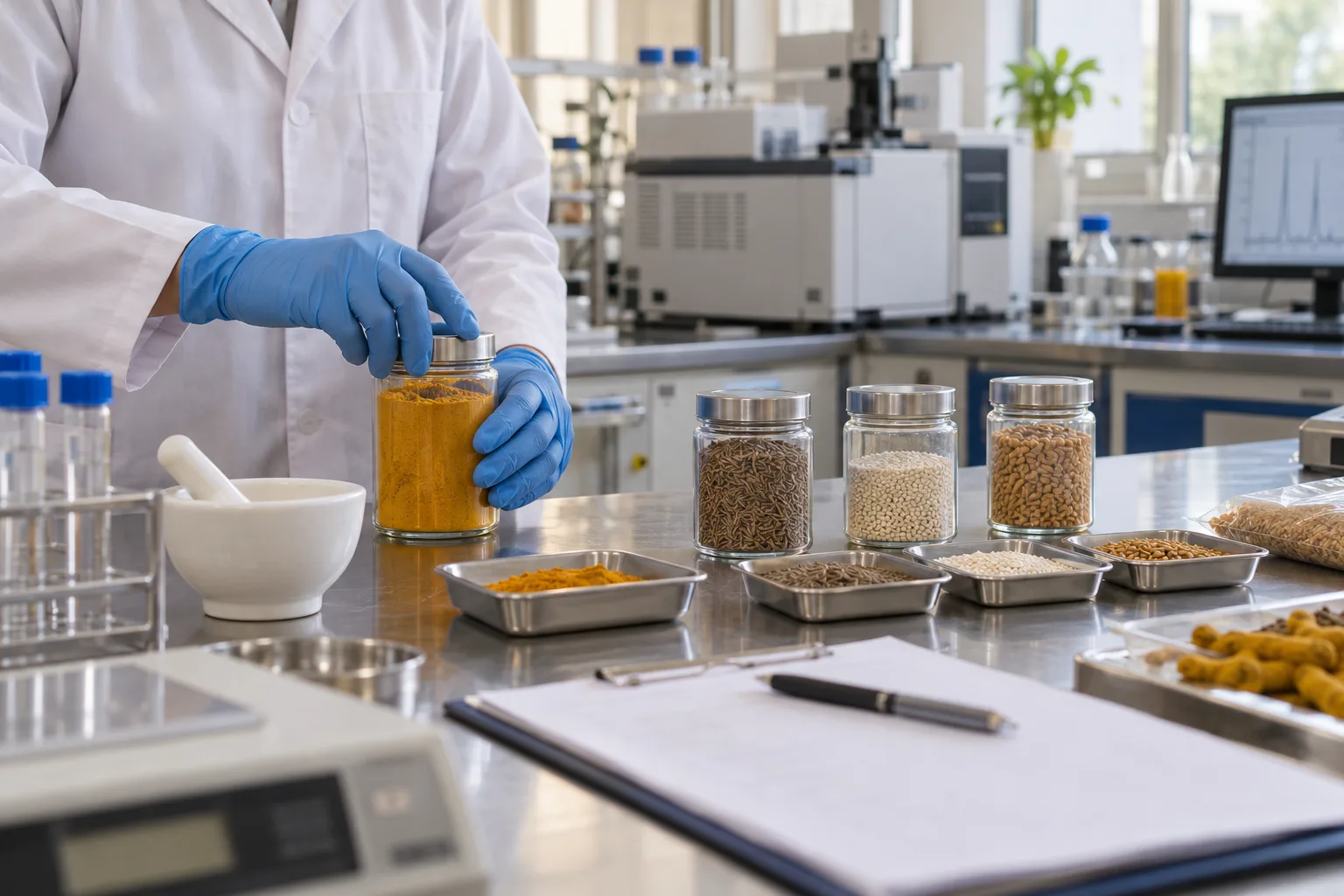
Growsian Agro coordinates microbiological testing within a documented export supply programme. For each order, the relevant product, operator, lot, evidence and destination requirements are aligned before dispatch.
Certification and quality evidence must match the exact product, operator, activity, lot, shipment and destination. A logo or certificate shown out of context is not enough to prove eligibility for every order.
Send an enquiry | Submit a Product Requirement
Why microbiological testing matters
Microbiological testing checks for pathogens and indicator organisms that affect food safety. It is especially important for products eaten without a further kill step (ready-to-eat), and for products with a history of contamination risk. Organic certification does not address microbiological safety, so a separate microbiological plan is needed where the product and use require it.
Pathogens and indicators
Depending on the product, a plan may include pathogens such as Salmonella, and indicator or hygiene organisms such as Escherichia coli, total plate count (TPC), and yeast and mould. Pathogen testing and indicator counts serve different purposes: pathogens relate directly to safety, while indicators reflect process hygiene.
Ready-to-eat risk
Products consumed without cooking — for example some seeds, desiccated coconut and certain powders — carry higher microbiological risk because there is no later step to reduce contamination. For these, the plan and any required treatment should be defined against the intended use and destination.
Product-specific plans
There is no single microbiological specification for all organic ingredients. The organisms, sample sizes, methods and limits depend on the product and the buyer’s requirement, and we do not publish fixed numeric limits. Agree the plan, sampling basis and acceptance criteria for the order. Testing supports, but does not replace, the supplier’s preventive controls. See the testing overview.